My Parkinson's Journey
In which Terri shares a humorous look at her journey with Parkinson's disease and Dystonia:
For me, illness and health are not opposites but exist together. Everyone has something that is challenging to them. Mine just simply has a recognizable name. My life will take a different path because of this but that's okay. Everyone has changes in their lives that create their path. I'm learning how to enjoy whatever path I'm on.
Educating doctors
Terri Reinhart
What scares you the most about your future?
This was one of the many questions I was asked last week when I volunteered to sit with a group of medical students and answer questions about my Parkinson’s disease. I was happy to do this as I believe firmly that those in the medical profession need to be educated about medical conditions. I realize that they already have a rudimentary knowledge of Parkinson’s disease; however, their knowledge is filled with words like basal ganglion, severe pars-compacta nigral-cell loss, striatum, and mitochondria. My knowledge is infinitely wider and contains words like oh fuck and this floor really needs to be cleaned.
These last words are usually uttered when I have an impromptu, involuntary inspection of our kitchen floor.
You can easily see by this that the gap between what the medical profession knows and what we, those of us living with Parkinson’s, know is big. It’s not just a gap; it is a canyon on a Grand scale. The difficulty that this presents to patients is huge, especially when those in the medical profession sometimes seem to feel that they are the ones who have the special knowledge, not us. I wasn’t sitting with those medical students because I was being nice. It is my duty to impart my mature wisdom to the younger generation of doctors.
The questions were those I’ve been asked many times. How did you react when you were first diagnosed? How does your Parkinson’s affect your family? For this question, it would have been much better to ask my family. I could say a few things but I’d only be guessing. Their answers would be much more colorful, even if I was listening in.
They asked very specific questions about what my dystonia does and what side effects I have from my medication. It’s easy to look at all these as little details that I rattle off to each doctor I see. It’s harder to put it all together. The question they didn’t ask was this: What does it feel like to have Parkinson’s disease?
This is what I would like doctors to know, because the world is just a little different for me now:
When I ask a clerk at the store where I can find something, they immediately take off at a dead run to the side of the store farthest from the point where I am standing, and they seem to expect me to follow them. After about 3 seconds, they’re out of sight. If I’m shopping for groceries, I get halfway through the store when, for some reason, I notice that the words on the store signs have run together. The cart is difficult to push, too. Do they make carts anymore that can go through the entire store without slowing to a crawl? By the time I get through another row, at snail’s pace, not being able to read the writing on the packages, I give up and go home. An hour’s nap will help me recover.
I can drive and do, but only when I feel safe. I don’t drive much at night these days because often I find that the street lights, stop lights, and car headlights and tail lights have been replaced by brilliant many pointed stars which radiate light in all directions, confusing me so I am not sure where the lanes are on the road. I also only drive when I am well rested because the route between our house and our school seems three or four times longer than it used to be. When I get home, I take another nap.
I also like to cook. This is when I am assured some time to myself. Everyone stays away from the kitchen when I start cutting up vegetables. Now, I usually sit on a high lab stool as I do my chopping, but one never knows when I’ll decide to practice balancing on two feet. I’m not nearly as good at this as I’d like to think I am, and when I lose my balance, watch out for the hand holding the knife! This is also the time when I do my impromptu floor inspections. Chris has been very bossy with me lately about using the stool. I don’t know why? I keep the floor cleaner this way. I’m glad when dinner is in the oven. Then I can get a little nap in before beginning the task of eating.
I eat just fine. I like everything (except lima beans and sardines) but at night I become a mushaterian. I eat anything mushy or semi mushy that I am served. I eat large bites of meat only when I think Chris needs to practice his Heimlich maneuver skills. I am also on the dystonia diet. This doesn’t require any special foods, just a unique hand exercise. It goes like this: I reach out to take food on my fork and just as I am about to spear the piece of broccoli or chicken, my hand snaps backwards. On other occasions, my arms will both pin themselves to my chest and I can’t move them. If I’m lucky, my family will help to gently pull my arms down so I can continue eating. If dinner is especially good, they might decide to just have more for themselves. I also have the opportunity for this type of hand exercise whenever I write or sign my name. Holding my right arm down firmly with my left hand is the one way I have found to get around this one.
Taking long walks used to be the way I would relieve stress, think things over, and get fresh air and exercise. A long walk for me now is half a block. Beyond that, my legs start to turn in and I get all twisted up. I use a walker, sometimes. It helps a lot but I feel silly. When I start out I certainly don’t need it. It’s just when I’ve been walking for more than two or three minutes that I start appreciating it.
My medicines work incredibly well. As many of us know, it takes a cocktail of medicines to keep us going. Mine are adjusted just about right so I can function well. It’s an adventure getting the medicines at the right place. Starting with a small dose, I titrated up until my symptoms were relieved. If I went up too fast, my body would scold me fiercely by going into what the medical community already knows as “dyskinesias”, and I know as, “Oh God, here I go again”. Each drug has side effects, too, and I am sufficiently wary that I keep my medicines at the lowest dose possible to get some relief. At times, my doctor would like me to increase my dose. I respond with the question, “How normal do I have to be?”
Regardless of the miraculous work of the drugs, by evening time I am tired and nothing works. My vision gets funny and my speech slurs. I hold on to things when I walk. If by chance someone drops something on the floor or the phone rings or there is any kind of sudden sharp noise, I startle so badly that I may fall. My neck hurts, my muscles ache all over, and I tend to get a bit queasy. It's then that I consider Medical Marijuana. I never truly knew the meaning of the word “exhausted” until I had PD.
People who don't know me well, often say they would never have known I had Parkinson's. I look perfectly normal to them and their expression tells me they are wondering if it's just my over active imagination. People who do know me well, often look at the clock and ask me if I've remembered to take my medicines. They're wondering when the meds will wear off and whether or not they'll have to give me a piggy back ride to the car.
If all this sounds dire and depressing, get over it! For you young doctors-to-be out there, it’s happening to your patients, not you. Not most of you anyway. With the prevalence of PD, more than likely one of you will experience this in the future. To tell the truth, I don't find it depressing at all. Everyone goes through challenges in life, in one way or another. I don't think my situation is more difficult than someone else's; its just different.
So, what scares me about the future? It’s not that bad, really. Think about it! I get a good physical workout everyday without even going to the gym. My posture is better than it’s ever been because my dystonia pulls my shoulder blades back. I get to stay home now because it’s too exhausting to work, even part time. I’m more available to my husband and my kids. I get to see my grandson often. I don’t have time to worry about things I can't control. I have a family, my grandson, and my elderly parents to care for. My contortions, as I try to move from place to place, can be quite entertaining to others. I laugh a lot. I have my art work to complete and, after Christmas, I’m planning on spending just a little time each week volunteering with second grade reading groups at our school.
I don’t stop long enough to think too much about the future, and when I do… I’m usually napping.
Turbo Hamster
Terri Reinhart
I had an awful dream the other night. It wasn’t anything tragic or scary or weird. In fact the scariest part for me was that the dream was terribly ordinary. My family was doing what they do. Chris was doing yard work and making trips to the hardware store. Patrick was working on his computer, learning a new program, and Emma was out with the chickens. And I was going crazy. I was flipping back and forth between being okay and then suddenly getting over emotional. I was frustrated with everything my family was doing or not doing and somewhere inside, though I would never admit it, I was sure all of this was their fault.
Was this really a dream or did someone videotape me over the last few weeks and find a way to play it back to me while I slept? It all looked way too familiar. I dismissed this quickly. It must have been a dream because I’m a very together person and I handle everything in my life, both the bad and the good, in a very together and reasonable way.
I will admit that I’ve been doing a little bit too much lately and my Parkinson’s and Dystonia are both a wee bit out of control right now. It’s not that bad. True, when I made dinner the other night, I ended up juggling forks and dancing backwards across the room …and my walking has deteriorated to the point that I purchased a walker, but that’s just because I’ve been preoccupied with other things. I’m a little bit busy right now, that’s all.
I’m not really that busy. I’m just taking care of my family and my parents, trying to finish up a few projects, take care of the chickens, ducks, and geese, and still have time to spend with my husband, kids, and grandson. I’m not stressed, either. When I’m tired and don’t have the energy to do what I need to do, I just feel guilty. That gets me going again.
Guilt is a good motivator. It pushes me to work too hard, feel lousy about what I do, and then feel lousy about everything I didn’t do. Being a most efficient motivator, the guilt builds up and up until I do even more and feel even lousier, and then I crash and have to spend a few days in bed, or mostly in bed, as I feel guilty when Chris is doing the housework and cooking, and I feel guilty not spending enough time with him and the kids. My friends, I’ve been ignoring altogether. I’m a lousy mom, lousy wife, lousy daughter and lousy friend. It must be something I’m not doing, right?
I’m on the hamster wheel again. This time, I’ve become the TURBO HAMSTER!
I get thrown off from time to time and land flat on my face. My reaction to this is perfectly normal. I blame my husband. WHOA! This makes me feel even guiltier, so I work harder and try to do something special for him to make up for the fact that he’s been living with a madwoman for the last month. Yup, there’s nothing like guilt to get you going.
This is the most efficient way to go crazy, too. That’s not necessarily in my plans but after watching that videotape dream the other night, I realized I am heading in that direction. Damn. Is there any way I can keep running on the wheel without going crazy? I didn’t think so.
One option, of course, is to get rid of the hamster wheel. That’s easier said than done. If I had become a gerbil instead of a hamster, I’d simply turn it into confetti. Life is simple for gerbils. If it tastes good, eat it. If it doesn’t, chew it up. My life isn’t going to be less busy in the next few months. Getting out of the cycle of guilt/overdoing it/crashing/more guilt/more overdoing it/more crashing/more guilt is not going to be easy. As I’ve said lots of times already, guilt is very efficient at motivating me to get things done.
I’m going to try. I owe it to my family and friends. I’m going to take the advice of my friend, Ed Sikov:
“Take each day for what it is - a day, that's all. I really do believe in that way of thinking and feeling and living now. Yes, of course - I get upset and disappointed too - a lot - but I'm learning to soothe myself by remembering that the sun will rise again the next day and the day will be brand new and fresh and all its own, open for me to do what I can, and accepting of me if I can't do much of anything.”
Ed has Parkinson’s disease, too, so he understands what I’m going through. I know what he’s been through. If he can do this, so can I. Ed’s also a film historian and film critic. That videotape dream (or was it on DVD?) wouldn’t get very high ratings from him. My day by day goal will be to make sure the next dream/film is one he’ll enjoy.
Lights, camera…breathe!
Control Freak-y
Terri Reinhart
I admit it. I’ve always liked being in control of my life. I don’t want to control other people, though, not even my own kids. They’re old enough to take care of themselves. I certainly don’t want to control my husband, either. He’s lots bigger than I am. I just like being in control of me.
This is, however, easier said than done.
I want to be in total control of things like my tear ducts, my bladder, and the toes on my left foot. I would love to be in charge of where my legs take me. It would be incredibly nice to control how I chew and swallow and be bossy enough to make sure that the “chew, swallow, breathe” sequence remains in proper order. It would be nice to know that when I put a pen in my hand and try to write my name, my hand will actually move towards the paper, every time, without suddenly snapping back to my chest.
Having Parkinson’s disease and Dystonia has taught me to let go of many things, such as my self-consciousness. Dystonia is highly visible. In my very public job as a teacher, I didn’t have the luxury of trying to keep my physical challenges hidden. Though it was embarrassing at first, I’m not sorry about this because I’ve learned so much from sharing with others and listening to their stories. Keeping my health challenges private would have taken a lot of work, and I suspect I would’ve ended up feeling pretty lonely.
I thought about this when my mom was diagnosed with vascular dementia. Vascular dementia is a horrible disease which attacks your brain and your thinking but not necessarily your body. Suddenly, you may not remember how to work a telephone or buckle a seat belt. You may not even remember what the seat belt is for. Your house might look unfamiliar to you and you can’t figure out why your family won’t take you home. It’s like that moment when you wake up from a dream and, not being fully awake yet, you don’t know for a few minutes what is real and what was dream.
Imagine living with this 24 hrs a day, 7 days a week. You don’t ever fully wake up. It gets worse, too, until you may not even recognize your family. It’s also an embarrassing disease. You might suddenly become frightened of the people in your house and decide to run away. You say things you would never have said when your thinking was functioning properly. And in some small way, you are aware of what you are doing and that it isn’t right. Not surprisingly, my mom didn’t want anyone to know about her diagnosis.
I understand this, from her perspective. Appearance and control has always been of the utmost importance to her and Dementia robs you of just about any control you might have over your own situation. I have another responsibility to her, however. I need to make sure she is safe. This means that I did tell a couple of her close neighbors what was going on. I need to know that the neighbors will help look out for her if she decides to take off down the street.
What I found were neighbors who were willing and able to hold Mom’s health challenges with real compassion. They even wanted to do more. One neighbor has been bringing dinners to them. She was thrilled to do this for my parents because her own father lives on Long Island, too far for her to be much help to him day to day. Cooking a meal for my parents helps her to feel that she is doing her part, even in a small way. It isn’t small, either. Not for us!
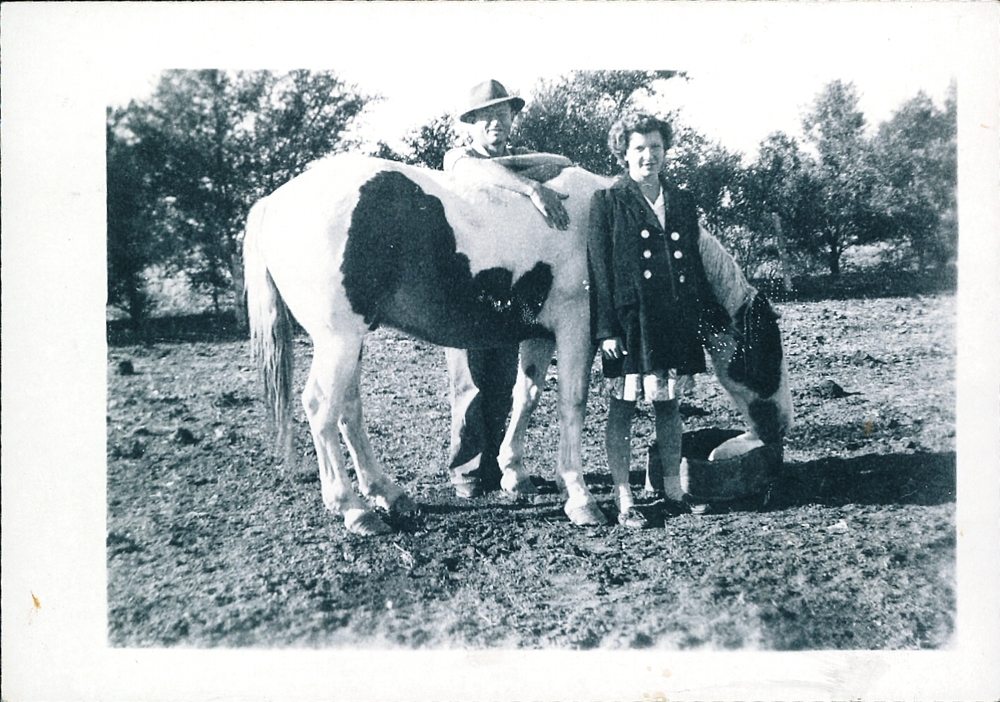
I’ve also been totally blown away by my sister and my two brothers. Each of them has taken a part of the responsibility. Tom has taken charge of all the financial issues. He knows what he’s doing and we all trust him completely. Dave comes to town whenever he can. He cleans the house, paints, mows the lawn, and entertains Mom and Dad with his gentle humor. Cathy came to town for a week and helped out. She works as an Activities Director in a nursing home in California and brings this perspective. We all keep in touch by phone and email. Everyone has been exceptionally supportive.
I have it easy. I can’t keep my toes from curling in or my arms from twisting up against my chest. My legs may suddenly decide that I need to walk backwards or sideways or bump into the wall. But I have it easy. My thinking is still okay.
At least I think it is!
Battle Plans
Terri Reinhart
I’ve been chopping down trees again.
Some people drink when they’re stressed. Some eat lots and lots of chocolate. Some people go shopping. I chop down trees.
I’ve been chopping down trees for days, which means I’ve had a stressful week. Of course, I don’t chop down any old tree, just because I’m stressed. If this were the case, we wouldn’t have any trees in our yard. I chop them down only if they deserve to come down. These particular trees were elms, covered with black scale, with leaves so eaten by bugs that they resemble lace filigree. They were not very attractive.
They had also become a bit overgrown. The previous owners of this property obviously felt that one could never have too many trees. When we bought the property, we were somewhat naïve as to how much work it would be to keep up with all this vegetation. Armed with machetes, we explored our new garden, finding a number of hidden treasures such as concrete benches, numerous old coke bottles, a BB gun, and a doorway leading to an ancient underground temple.
After almost 20 years, we have made quite a lot of headway in our constant battle to keep the vegetation from taking over completely. We can walk through the trees in our backyard without taking along the machete and without losing our sense of direction. The elm hedge out front, however, has remained one of our biggest chores. Elms grow fast. If we had trimmed them weekly, perhaps we could have kept them at bay; however, this did not happen. We looked out the window one day and saw that the hedges had shot up to 15 feet, during the overnight rainstorm.
This wasn’t just an elm hedge; it was an impenetrable elm fortress. I was getting claustrophobic.
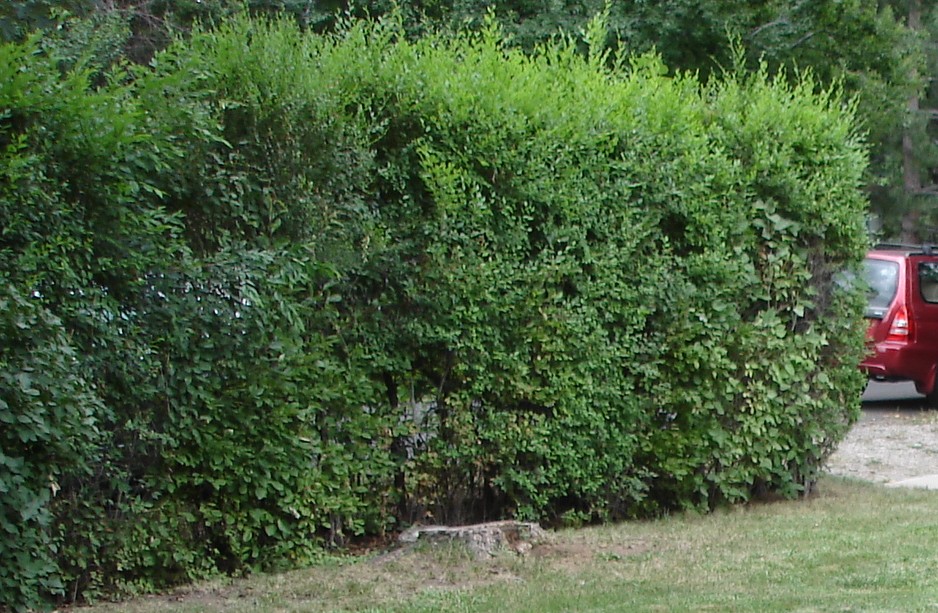
Our neighbor wasn’t so sure of my plans to cut down the hedge. She looked at me doubtfully and said, “You won’t like it. It’s going to be so open; you’ll probably get more visitors.” I didn’t think this was a bad thing at all, so I started working.
After a week of doing battle, armed only with hand pruners and a tree saw, I felt much better. This is a wonderful way to relieve stress. I’m surprised it hasn’t been discovered by more people. Most of the work, I did myself, by hand. Chris knew better than to interfere. I cut off the branches, lopped off the tops, and cut down the smaller trees. I got good and sweaty. After my hard work was done, Chris came with the chain saw and cut out the trunks of the trees in minutes.
I have learned by past experience to pace myself so that I don’t collapse completely when I’m done. I worked only for an hour each day, in the cool of the early morning, except for yesterday... and the day before yesterday. That's when I found myself working in 100 degree weather at noon because I was excited to see the job finished. Today, I collapsed completely.
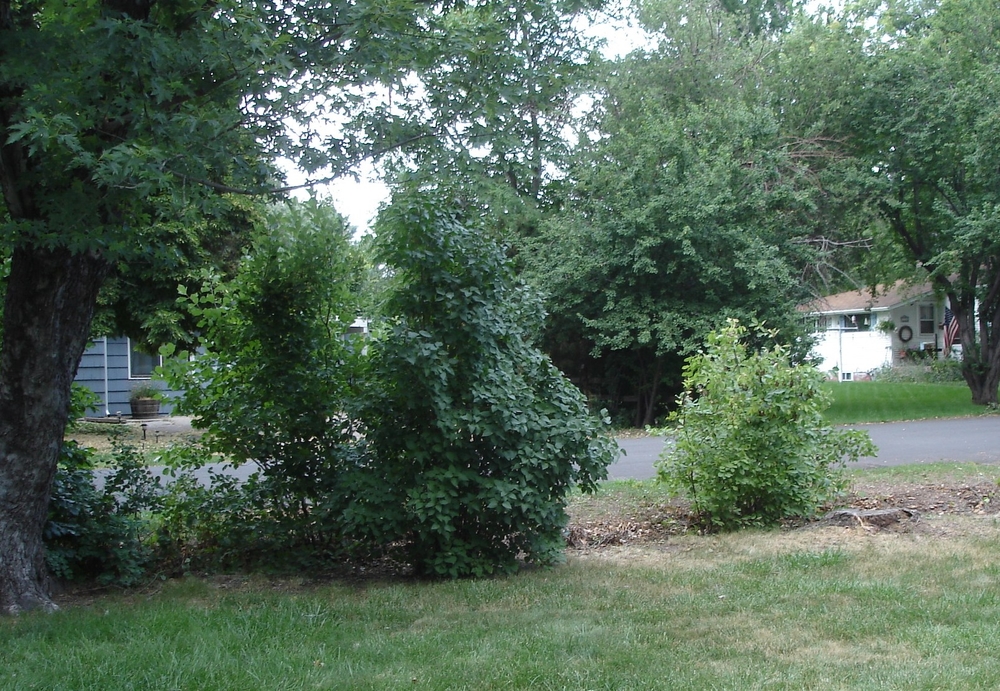
The yard looks better, too. As we did in the back yard forest, we found treasures hidden in the elms. A few lovely honeysuckles, chokecherries, and lilacs were valiantly struggling to survive. We’ll prune them carefully so they can grow without being crowded and nearly strangled. There is still plenty of privacy, even more than I need or want.
Privacy is okay to a point, but I wouldn't ever want to close myself in too much. My health challenges have made me more aware of how dependent I am on others, both for my physical and emotional health. I tend to go to the opposite extreme. Open the doors and windows! Come visit anytime!
I have always enjoyed being with people. Walking the three blocks home from school as a teenager, I often found reason to dawdle on my way. When I arrived home at 5 or 6 pm, my mom would not be worried. She knew I had stopped to chat with someone. I got to know a lot of people. One of my regular stops was to see the Hageman’s. Mr. Hageman was my special friend and he and his wife became my neighborhood grandparents. Mr. Hageman always told me that he wanted to be there when I "walked down the aisle”. Unfortunately, he died too soon, but we included his favorite hymns in our wedding ceremony. There were others, too, customers from my paper route, and school friends. I learned very early that everyone has stories to tell.
Now that our elm hedge has been taken down, I don’t have any more trees I can start attacking when I have a stressful day. I’m not worried. I’ll find something to do. If I get desperate, Chris will find some work for me. In the meantime, our yard is so open now. Maybe we will get more visitors.
That would be fine with me. I love listening to stories. That's nice after a stressful week, too.
John Argue - Parkinson's Disease and the Art of Moving
Terri Reinhart
Here is the link to John Argue's website:
Exercise is a walk in the park for Parkinson’s
Terri Reinhart
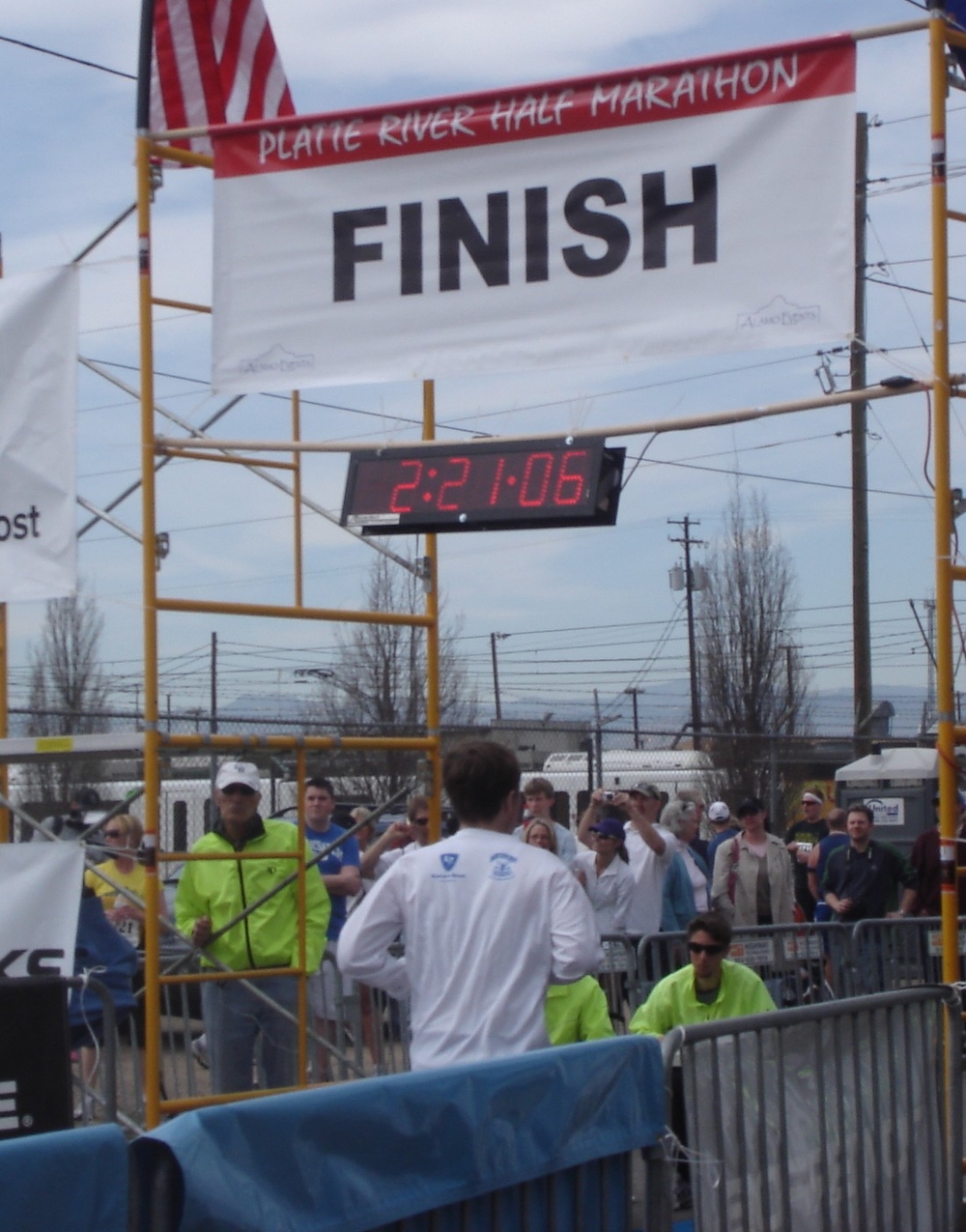
In April, my daughter and I watched our friend, Teddy, cross the finish line as he completed his first half marathon run. I couldn’t even begin to imagine running that far, much less doing it in just over two hours. One of the benefits of having Parkinson’s disease, I have always said, is that no one will ever expect me to run a marathon. I was tempted to change my thinking on this however, as I got caught up in the excitement and, in that moment, I wished I could run, too.
Last weekend was the “Shake, Rattle, and Stroll” walk for Parkinson’s disease in Denver. It was a 5K walk to raise money for the Parkinson’s Association of the Rockies – or PAR. PAR is a great organization. They offer a number of different exercise classes and many other services. It’s the emphasis on exercise that really interests me right now.
Exercise is arguably one of the most helpful treatments for Parkinson’s disease. One person who believes this strongly is John Argue. Mr. Argue has been teaching movement and voice for people with Parkinson’s since 1985. His approach reflects his broad experience with yoga, tai chi, and dance, and is brought with a gentle humor and imagination, as he encourages his students to “make friends with the floor”. As in our yoga class, the goal is to make us aware of how we are moving.
Our yoga teacher, Paul Zeiger, led us through some of Mr. Argue’s exercises this week. As a former kindergarten teacher, I was intrigued when the exercises included imagination. One exercise had us leaning to one side and picking up the little mouse by the back chair leg. Then we went to the other side and picked up the mouse’s wife. Here is where I had my only issue with the verbal instructions to this exercise. Having picked up these mice, we then were simply instructed in the next move. I sat there puzzled for a second or two. What do I do with the mice? Nearly twenty years of leading movement circles with young children and creating imaginative stories for circle time had its effect, and I had to mentally let the mice go before I could move on to the next exercise.
Joining the yoga class and becoming aware of all the times when I can "exercise" by doing my daily living activities with conscious movement has made a huge difference in how I feel, both physically and emotionally. People who haven't seen me for awhile are amazed at how much better I look and how well I am moving. I'm not so sure that I am really moving all that well, but I think what people notice is that I am standing up straighter. It’s amazing how much more confident I feel when I stand up straight. The PAR sponsored yoga class has gone a long ways in improving my quality of life with Parkinson’s disease.
This is why we wanted to support the "Shake, Rattle, and Stroll" walk for Parkinson's disease last weekend. I was excited about walking, too. Maybe I was still caught up a little in the thrill of watching the half marathon in April, but I thought that just maybe I could do it.
The night before the walk, I went over my list of necessary items to bring along: water bottle, medicines, hat, sleeping bag, camp stove, food, a towel, and a pointy stick. I started gathering everything together and was just rolling up the sleeping bag when Chris stopped me.
“What are you doing?”
I showed him my list. He didn’t seem to understand why I needed some of the items.
“Come on,” I told him, “it’s a 5K walk. That’s over THREE MILES! You know how slow I am. What if I don’t finish by nightfall?”
“Oka-a-ay,” he said, doubtfully, “so the sleeping bag is to sleep in, the stove for cooking, and the food to eat. Why are you packing a pointy stick?”
“In case we run out of food,” I had thought that would have been obvious. I wasn’t sure if there were fish in the lake, but I knew there were more than enough squirrels around. If we were desperate we could always have squirrel on a stick, roasted nicely over the camp stove.
“Wouldn’t it be easier to take your scooter?” my husband logically intervened.
I sadly put all my supplies away, except for the water bottle and hat, and we loaded the scooter in the trunk of the car. Emma agreed to ride the scooter while I walked as far as I could. The preparations done, we had a lovely surprise a few minutes later, when Teddy called to let us know he’d be joining us for the walk. Another dear friend, Marie, had also promised to join us. It would be a great time!
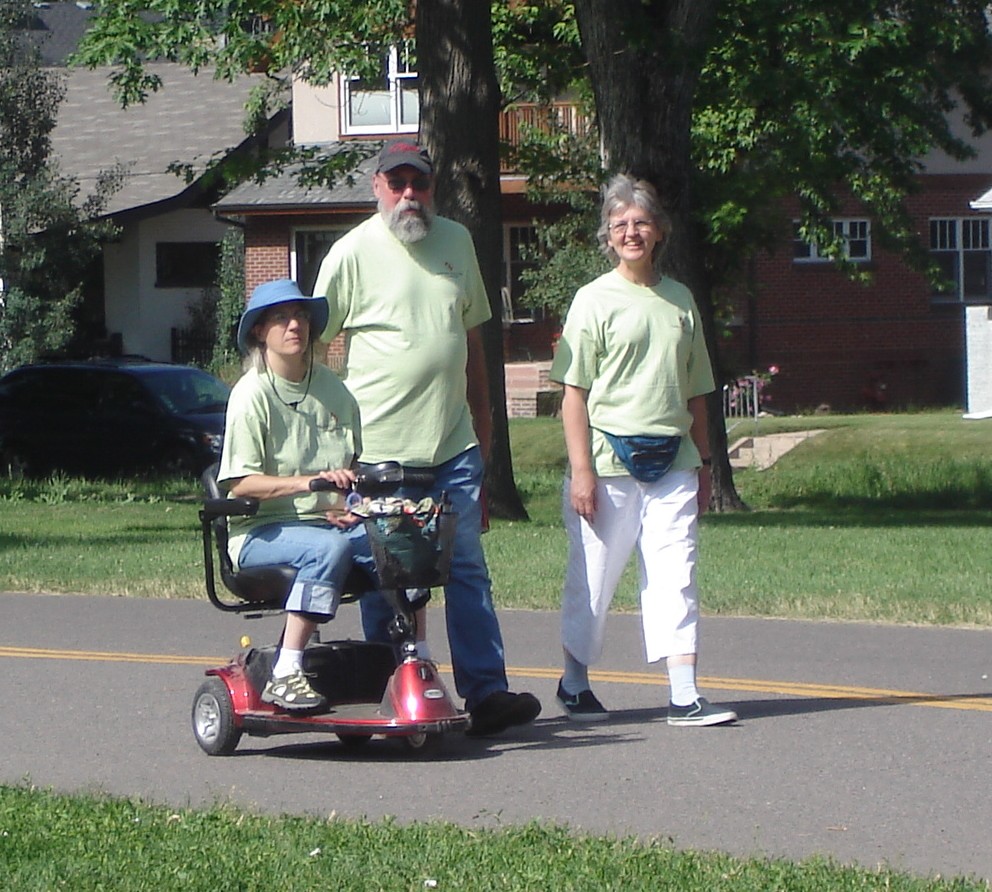
It was a great time. We warmed up with yoga and tai chi in the park and then started on our way. I made it halfway through the first 1K before starting into my “losing at Twister” impression then rode my scooter till we were close to the end. I let Chris take the scooter as I walked across the finish line.
I know that, compared to a half marathon, that this was just a walk in the park. I was pleased with my accomplishment, however, and will work towards being able to walk an entire 1K next year. That’s enough of a marathon for me!
FCC and FDA to hold Public Meeting about Regulatory Issues concerning Medical Devices
Terri Reinhart
http://www.fda.gov/MedicalDevices/NewsEvents/WorkshopsConferences/ucm215046.htm
I wanted to post this for anyone interested in the issues of implanted medical devices, such as with the DBS surgery, and electrical frequencies that can interfere with these devices. Gary Olhoeft (see other entries with his name) has sent this on.